GSAs, Youth and Politics

When she was in Grade 10, my daughter came home late from school one day.

She informed me, proudly, that she was now a cofounder of the first GSA in Fort McMurray. And then she had to explain to me what a GSA was and why she felt the need to help found one, as I didn’t have a clue as to what she was talking about.

GSAs – or Gay Straight Alliances – are fundamentally a student club, not much different from the variety of other clubs my kid has been involved in over the years, from the chess club to the robotics club to the drama club. The GSA is designed to promote and celebrate diversity and develop inclusive and welcoming school environments for all students, including those who happen to be LGBTQ.

The more research I did on GSAs the more I began to understand why my daughter, who is a keen believer in equality and fair treatment, would wish to found one, and the more I began to understand that these groups of students provide safe, welcoming and accepting spaces for youth who may not find this in other places in their lives.

Recently Jason Kenney, the newly elected leader of the Progressive Conservatives in Alberta, suggested that when a student joins a GSA the parents of the student should be notified, without the consent or perhaps even the knowledge of the student. His exception to this would be if the parents are “abusive”, although how one determines if a parent is abusive in this regard seems undetermined.

There are several problems with Mr. Kenney’s approach, and it suggests he has never spoken to youth who have founded or participated in a GSA to better understand why this concept will not work for them. Far more frightening, he seems to fail to recognize that it will put youth already at risk into even more potential peril.

Laying aside the fact that schools have never taken on the role of informing parents of their children’s after-school club involvement (as my daughter is in Grad 12 I can attest the school has never told me she had joined a club, and the only way I knew was when she told me), consider only this: youth join clubs to spend time in a safe place with other youth with similar interests.

In my daughter’s GSA they have watched Disney movies and baked unicorn cupcakes. It was not some form of “sex club” – it was simply a safe connection point for youth of all sexual orientations, and a way to help them to form stronger peer relationships that would be of benefit not only within the confines of the club meeting, but in the hallways, libraries, lunchrooms and classrooms. It was a way for youth who might feel “different” to develop a sense of belonging, of community and of connection.

The statistics on GSAs are quite clear: they save lives. And in the case of my own daughter and her friends, the GSA has provided a safe place free of judgement where they can connect with others.

When I asked my daughter, who is now about to graduate and on the cusp of adulthood, about the concept of informing parents when their child has joined a GSA she was appalled. The very reason many youth join, she said, is because they are not yet ready to explore the topic with their parents. Their parents may not be “abusive”, but they also may not be supportive, and she shared with me that many youth still fear their parents will abandon them, turn them out of their homes or try to convince them they are not LGBTQ because the parents are not ready to accept this news. Youth join GSAs to find strength with their peers, both LGBTQ and straight allies, and to help to build their own confidence and self-esteem so that they can share this news eventually – if they wish to – with their parents and families.

What Jason Kenney is suggesting will do the exact opposite of what GSAs were created to do; his approach would deter youth from joining as they will in effect be “outed” to their parents perhaps long before they are ready for this to occur, and it strips youth of their fundamental right to privacy.

And yes, our children have a right to privacy, particularly as they likely understand their own family dynamics far better than anyone else ever could. If they wish to join any club – chess, robotics, drama, GSA – without the school informing their parents, should they not be able to do so? Or are we going to extend this expectation of parental notification to all student involvement?

And if the only club we are going to require parents be informed about is GSAs, then doesn’t that speak far more to our own preoccupation with the sexual orientation of our children and others than anything else, and our own discomfort not only with homosexuality but with sexuality in general?

The truth is that if we are truly interested in putting the safety and security of our youth first, then we will unequivocally support GSAs as safe, peer-supported spaces for young adults to connect and gather without fear. As soon as one introduces the parental notification element, the faith youth have in these groups will diminish, and we will remove yet another support system for youth at risk in our society.

Jason Kenney’s proposal cannot and should not be ignored. His willingness to expose young adults at risk in this way indicates he is not well versed in the issue and has likely spent little time with LGBTQ youth or those who participate in GSAs. Whether or not a young adult is LGBTQ or not should not be the issue; what is the issue is ensuring ALL youth have the opportunity to connect with other youth in safe environments. Until Mr. Kenney can commit to that goal, he is not someone who should be trusted with the future of the youth of our province.

It is profoundly disappointing that this issue is still surfacing, and that youth still need to fight for peer-driven support groups. It is even more deeply disappointing that any politician in 2017 is promoting a policy that has the potential to cause the future of our province – our youth – to turn away from the very kind of support they desperately need. 

I’ll leave the final words to my daughter, who cofounded a GSA because she saw the need first hand and knew it would benefit others.

“Adults always make everything about them,” she says. “This isn’t about adults. This is about kids. This is about us.”

Wise words indeed. In this instance, Jason Kenney, it might be prudent to realize it’s not at all about you.

Traumatized

It starts innocently enough, as these things often do on social media. I have posted a response to a thread on a friend’s wall, where a discussion regarding Post Traumatic Stress Disorder and potential long-term impacts on a sufferer is occurring. I post the following, based on both anecdotal and factual evidence showing the incidence of PTSD in our community following the wildfire in May:


And out of nowhere comes a response that leaves me somewhere between enraged and heartbroken, because the individual posting it clearly has no idea what he is talking about when it comes to an experience that impacted tens of thousands of people:


Perhaps most troublesome is that when I creep his profile (which I freely admit I often do – whatever is in the public eye is fair game, in my opinion) I discover he has listed his Bachelor of Psychology degree. I am now not only enraged and heartbroken, but aghast.

I have blacked out his name, because as easy as it would be to identify him I always believe we should focus on the words and actions of others and not on their persons; I have no desire to “release the hounds” on this individual, but I do find myself in desperate need of commenting on his premise that “watching insured material possession burn is not trauma”, and how he minimized the experience we endured.

Trauma, as defined in every resource I have found, is “a deeply distressing or disturbing experience”. Often, the definitions also include potential risk to life, and natural disasters are clearly indicated as a potential source of trauma.

I recall May 3 very clearly. And I recall one moment when I stood in a field, watching flames leap into the sky, and feared not only for my own survival but for the survival of members of my community. I recall finally reaching Edmonton that night after a journey of over eight hours, and watching anxiously as people I knew checked in on Facebook to indicate they were safe. I remember the phone calls – dozens of them – checking in with every person on my contact list to make sure they and their families had made it out. I remember thinking it would be a miracle if everyone survived the experience, and I remember the phone call from one of my closest friends telling me that two young adults had been killed during the evacuation on May 4.

I broke down in the parking lot of the Holiday Inn Express after that phone call, sitting on a parking curb and crying; we had been denied the miracle. The narrative of all of us – every person – surviving had ended.

For days I continued to fear the worst, news of a friend or the spouse of a friend or a stranger who fell asleep after a long shift and didn’t wake up in time to escape; that this did not happen is truly a miracle in itself as I have lost track of the near misses that day, the pounding on doors to wake a sleeping neighbour.

I remember the drive away from Fort McMurray. At around 6:30pm I headed south, and as I drove I watched my city burn in my rear view mirror, flames and black smoke all I could see. I remember thinking I may never be able to return home again; I recall wondering if I would even have a home to return to.

I remember all the uncertainty of the early days, checking satellite photos and having my internet provider ping my modem, desperate to know if my house stood or had fallen; and I remember counting how many friends had already lost their homes, stopping when I reached the number 35 because I couldn’t handle any more.

I remember wandering Edmonton in a state of shock and disbelief; how could this happen to us, to me, to my community?

May 3 was not about “watching insured material possessions burn”. And even if it had been, no one looked at their house in flames and thought “well, there goes the toaster”. No, they thought about the family photos, the quilt grandma who passed away last year had knitted, the Christmas ornaments the kids made, the memories tucked into every corner; insurance would never replace those “things” or quell the pain their loss caused.

May 3 was about families who had minutes to escape, their back yards on fire as they leapt out their front doors; it was about people trapped in neighbourhoods abandoning their vehicles and, very literally, running for their lives. It was about watching everything you knew and cherished and held fast in peril; and it was about the deep fear you feel when you know life would never be the same again.

Trauma? Of course we experienced trauma. Some of those who lived through it may feel it was not traumatic, and I am both happy for them and deeply envious. But no one gets to tell someone else whether or not they experienced trauma, and nobody gets to minimize or diminish our experience or what it is taking for us to recover from it.

I must admit that when this individual posted his response I sort of lost it for a bit. I fired back with several posts, each more angry than the last, and my friend, sensing this was headed in a dangerous direction, put an end to it by blocking this individual from commenting further. But he managed to get in one last comment, and one in which he stated that an event that I personally knew had occurred during evacuation had not happened; at that moment I knew that this person spoke not from a place of knowledge and understanding, but from a place of ignorance and callousness. To summarize, he simply didn’t have a clue about what he was talking about.

But we do. We lived through the kind of experience few will ever encounter; and here we are today. And I am so very proud of all of us, because we got through it together and we continue to do so. We share a common bond, one that will last the test of time, and I suspect one day when meeting someone new the question will be: “were you here on May 3?”. Those that were will always be connected through an experience none of us would ever wish to repeat and that changed us forever, but that strengthened us at the same time it traumatized us.

Nobody who has not lived it will understand it; and some will seek to minimize it, most likely for their own reasons as acknowledging it somehow disturbs their own narrative. Fortunately, these people are a rarity, and we have instead been embraced by the vast majority who may not have lived the experience with us but who empathize and understand the impact it has had on every member of our community, from the youngest to the oldest.

And for this individual, the one callous enough to suggest we did not experience trauma? Just as with everyone I encounter, my wish for him is that he never experiences what we have and never has to learn what we have learned about trauma, survival, PTSD and the slow and painful recovery of an entire community.

And perhaps most of all the experience of the last ten months has taught me the power of forgiveness and of letting go; and with this post I do exactly that, moving on with what truly matters, which is my community and our collective future.

Keep your eyes on the prize of our recovered community, my friends, and do not be deterred or detoured by individuals like the one I encountered; our wisdom has grown in ways others may never comprehend, and if there is  any good to come of the experience, perhaps it is that.

I am so very, very proud of all of you, every single damn day.

5G4A0004.jpg

The Problem with Millennials? It’s Not Them – It’s Us


img_4775

Angry, bitter, old people. Once it was my parents I occasionally thought of this way; but as I look around I am startled to see that now it is instead my peers, the fifty-something cohort that I experienced a childhood in the seventies with and slam danced through the eighties beside. Gone are the mohawks, safety pin piercings and leather jackets, but still there is the simmering anger of the suburban punk who had nothing more to protest than our parents imposing curfews and maybe expecting us to show up for supper once in a while.

And it seems a lot of our anger is directed at the generation us Gen-X types call the Millennials; and sometimes these offspring are in fact our own children who we tear down as we object to, well, pretty much everything about them.

They are entitled, we think, lazy and far too reliant on technology. They are too sensitive, they don’t understand what it is to REALLY have to struggle and they spend way too much time on social media. They are narcissists who do nothing but take selfies and they have no work ethic. After all, we work with them and we resent their attitude in the workplace. They don’t seem to care about anything, and frankly we find them completely inexplicable.

My friends, it has happened. We have become our parents.

I know, we all swore we never would. We would remember those crazy days of our teens and twenties, right? Back when our elder generation thought we were the problem and said we had lost our way (as well as our minds, what with that whole Sex Pistols thing). We were never going to be so critical of youth, because we had been there, man. We understood.

And then we started to grow older. Some of our youthful flamboyance and optimism ran straight into reality as we realized our mohawks weren’t helping us to secure jobs. We started paying rent and mortgages and taxes and car payments.

Then the next generation came along. And you know what? They grew up differently than us.  Of course they don’t remember some of the shit we remember, and why should they? I don’t recall a world before indoor plumbing, but that doesn’t mean I am entitled; it just means I never experienced it.

If we had all this tech when we were in our teens and twenties you can bet your ass we would have enjoyed the hell out of it. Honestly though I am glad there are no Instagram photos of some of my exploits with bands like The Dead Kennedys or those rather drunken episodes at seedy bars in late night Toronto.

And speaking of the workplace, how my older coworkers back then must have despised my cavalier attitude, coming in late and reeking ever-so-slightly of old booze. How carefree I must have seemed, free of any real commitments and only needing enough cash to cover the rent and my next bar tab.

Sure, some of us went to university – but then again there was all those beer-soaked keggers and parties which we barely recall. And when we got “real jobs” it took us some time to settle into the concept of working life, too.

But here we are, a few decades later standing in judgement and finding the Millennials guilty of ALL THE SAME THINGS WE DID. And you know what? I bet our grandparents felt the same about the generation after them, the spoiled little jerks who lived a life far easier than their own.

Can we be honest for a moment? The real problem with Millennials is that we are seethingly jealous of them.

We want to be them, with their easy lives and carefree attitudes.

Dammit, we want to be young again.

And it is all so absurd, because the truth is the Millennials don’t have life any easier than we did; it’s just different. They face different challenges and opportunities than we did, and we might not understand theirs any more than an older generation understood ours.

At the age of 50, I find myself the parent of a Millennial. There are many things I find curious about her, like why watching Youtube videos of other people playing video games with a running commentary is so intriguing. And I know she is different from me, as she has grown up as a digital native with tech my parents could have never imagined at her fingertips her entire life.

But in so many ways she is EXACTLY the same as I was at her age, although she has an edge of cynicism I don’t quite recall. She is young and vibrant and opinionated and sassy. And just like I was, she is on occasion lazy, lacking in work ethic and without a care in the world.

Millennials are having kids now. I suspect they tell each other they won’t be as harsh on them as we were on them; they will remember being young and all the hardships they faced. They are likely deciding they will never be like Gen X.

And one day they will look at the kid next to them at work. and think “look at this entitled, spoiled lazy little bastard”.

And so it goes, as we grow up, grow old and become our parents.

But we do not have to become angry, bitter old people, my friends. We can choose instead to remember our own youth, whatever form it took. For me, I remember all the crazy, ridiculous stuff I did as a young adult, how I flew almost entirely by the seat of my pants, how I must have appeared to older adults who were likely appalled by everything about me, and how, in the end, I turned out pretty okay (I think) and managed to raise a Millennial kid who is brilliant and funny and sarcastic and flawed and frankly the best damn thing I have ever done in my entire life.

We can be adults and parents without becoming our parents; and we can remember what our own youth was like as we gaze on this next generation. They are, most simply, a new version of who we were decades ago; just with a few changes. And if we recognize that, maybe we can avoid becoming angry, bitter old people.

Okay, I will admit the “old” is unavoidable – but the rest of it? That is up to us.

Rebuilding Fort McMurray: The Confidence Factor

Recently I had the opportunity to complete an online survey from the Government of Alberta in regard to the Horse River Fire, the formal name for the wildfire some call “the beast” and that I just refer to as a “life altering event”. As I punched in my answers I recognized a growing sense of anger within me, and by the time I had finished the survey I realized the small flame of anger that had flickered inside me from the first question had grown into a full-blown inferno by the end. I had no idea I was still so very, very angry about the wildfire, and the most troubling aspect was that I had no idea who – or what – I was angry with.

We are into the recovery and rebuilding phase now, with our first tenuous steps already taken in those directions. And I have over time come to wrestle down many of my emotions on the fire and the ensuing impacts on me, those I love and the community I call home. As I worked through the anger the survey had provoked I began to realize that I wasn’t so much angry as I was distrustful; and the truth was that the wildfire event in 2016 in Fort McMurray shook my confidence in every regard.

I am, for the most part, a trusting individual. I move through life with a general sense of confidence in myself, in others, in my community and in my government. In May of 2016 this confidence was not only tested but truly held to the flames, and I found myself not only questioning but doubting myself, every level of government and even my community’s ability to survive an event that was by any measure unprecedented. The anger I felt stemmed from the shaking of that confidence, the rattling of the very foundation upon which I have built my life; and I recognized that there is a monumental task ahead of our community far more challenging than simply rebuilding homes. We need to rebuild confidence, faith and trust.

I understand that everyone was doing their absolute best in an unprecedented situation during those days in May of last year. I do believe there are many important questions to be asked and improvements that could be made, lessons learned from an experience none of us could have expected to occur. And in fact I know my own response, both personal and professional, could have been improved, so it is not that I stand in judgement of others; but I do believe the fundamental confidence and faith we had was shaken, and in some cases broken.

There is some remarkable work taking place in our community. The Wood Buffalo Recovery Committee, the Recovery Taskforce and the Social Recovery Taskforce (a group of representatives from local social profit organizations) are accomplishing amazing things already. I strongly suggest reading this document for a better understanding of the recovery process and learning the goals of recovery in both the short and long-term. And while there are many goals, I think most of them can be summarized in one statement: we need to rebuild confidence in Wood Buffalo.

Confidence in our governments. Confidence in our economy. Confidence in our resiliency. Confidence in our strength. Confidence in our response to emergencies. Confidence in our community.

And perhaps most significantly confidence in ourselves, the very people at the core of this event and who have been through an experience virtually unprecedented in our nation.

This rebuilding process is much like rebuilding the homes that we lost to the flames. We must rebuild a solid foundation based on faith and trust in our elected officials and the administration of municipal and provincial governments. We must rebuild the framework of trust in our economic recovery. And we must rebuild our confidence in our community and ourselves.

There should be no doubt that this is a daunting task. All those who step forward now – particularly candidates in the upcoming municipal election – need to recognize that rebuilding our community will only be successful if we can rebuild the trust, faith and confidence that was shaken or even lost entirely in May, 2016.

And it will not be easy.

The anger I felt when completing a simple survey reminded me that no matter how far I have come – and how far I think we have all come – there is a residual flame of that experience within me. Just as the Horse River Fire still burns, even months after it took so much from us, the experience still burns inside me, needing only the slightest puff of air to fuel the fire.

And I don’t think I am alone.

I don’t want to imply that I do not have faith in the people in Wood Buffalo; if I didn’t, I would have left this community long ago. I have tremendous faith in the individuals who have chosen this community as their home and I have every belief that we will rebuild. But there is no doubt this community feels differently to me than it did on May 2, 2016, and the factor I have identified is that we experienced an event that shook our faith, trust and confidence in the very things we once took for granted: our safety, our security and our shared future.

I won’t and don’t pretend to have the answers. I know that on May 4 when I woke in a hotel room in Edmonton I did so determined to contribute to the rebuilding of my community in whatever manner was necessary and no matter how long it took. Last week I was reminded of how badly my confidence had been shaken, and I realized that while I have begun to rebuild this faith and trust it will take more time than I had anticipated. And perhaps that is the very key: acknowledging the loss of confidence I experienced, allowing others to also acknowledge theirs and doing whatever I can to help them rebuild it while rebuilding my own.

As I sat and finished that survey I wondered why I was feeling angry, and for a moment I tried to tell myself I shouldn’t be and to change how I felt; but when I explored it and allowed myself to feel it I was able to define it, and once defined it became another brick in the wall of my personal rebuild. It became a moment of realization and recognition, and it became one small step forward – in rebuilding confidence in myself and my community.

img_2956

The Key to the Future of Fort McMurray: Think Local

It’s eerily quiet.

I imagine this is how it might have felt during the initial hours post-evacuation in May, with the majority of the people gone but a few stragglers remaining. In fact, it is so very quiet it is disquieting, and a vague thought pops into my head wondering if they have evacuated again and forgotten to let everyone know.

Except there has been no evacuation, and the disturbing quiet is for other reasons. It is a Tuesday evening, it is 7:30pm and I am in the local shopping mall – and I am one of a handful of shoppers there, so few they can be counted on my fingers and the number of store employees far outstripping the number of those spending money in the stores.

And for the first time in my sixteen years of residency in this community, I find myself feeling anxious about the future.

Even before the fire in May we were facing economic challenges in this community related to the price of oil, our primary industry and source of revenue. We were just beginning to really come to terms with that when the flames swept through, dealing yet another blow to a community already under strain. We returned to rebuild and recover, and while we have been focused on our recovery from the fire the worries of the economy have not disappeared, but perhaps faded into the background a bit. But I think it is time we recognize that we are facing some difficult times.

Our economy will see a little bump upwards during the rebuilding, of course. This construction boom, likely the largest in our history, will bring in some revenue for our local businesses, and we must squeeze every cent out of that economic boon that we can (a reason I am so grateful for the recent decision from the Wood Buffalo Recovery Committee to reject the concept of a work camp for those coming to build, ensuring they use local hotels instead). We must do everything we can to keep as much of the revenue generated through this rebuild in our community, as we simply do not know what our economic future holds in this region.

As I walked around the mall this week, I thought a great deal about the economic sustainability and viability of these businesses, and all the others in our region. I believe we have some hard decisions ahead, and we will need to recognize that perhaps having a shopping mall open late every weeknight is something we currently cannot maintain if we wish to see these retailers survive. It also means we must not only shop local, but begin to think local in every single decision we make.

Whether we are acting as consumers, voters or residents we must consider the local implications of every decision as relates to our economy. It is so easy – and so very tempting – to buy online or down south to save a few dollars, and it is something of which I too am guilty; but if I want my fellow community members to continue to be able to operate their businesses and to be employed, I must carefully consider the impact of my decision to do so. Every candidate in the upcoming municipal election must have a robust platform when it comes to economic development and support for the local economy, as to suggest this is not of critical importance is to misunderstand the very nature of the challenges facing our region right now.

Recovery from the wildfire is just one of the challenges we face, and perhaps the most immediate; sustaining our local economy is much more long-term and perhaps much more intricate in many ways, but it begins with one simple step: think local.

This might mean that in the short term we see some dip in services as businesses need to close in order to keep their expenses low during quiet times and focus on those times when they can generate good revenue; and it may mean we need to reconsider some of our spending habits and our expectations. And it may well mean we see some businesses falter and even fail, which will make it even more critical to support those that remain.

At the end of the day, I am an eternal optimist when it comes to Fort McMurray and our community; I truly believe in our future and I believe in our strength and resiliency, which has been tested more than one could ever imagine in 2016. But I also believe the future is not something that just happens; we build the future with every step and decision we make today. And the decisions we make in regard to our economy – as consumers, as voters and as residents – are critical. For me, the light bulb went on when I stood on a shopping mall concourse and realized I was the only person standing there, a sense of disquiet rising within me as I recognized that this was deeply worrisome and that the missing noise and bustle was a sign of trouble.

Don’t just shop local; think local. My future – and yours – depends on it now more than ever before.

Not-so-Crazy Cat Lady

They say the first step in overcoming addiction is admitting you have a problem.

I think I may be a crazy cat lady.

There, I said it. Let the healing begin!

Except – well, wait a minute. I don’t think I need healing or a twelve-step recovery. I don’t actually mind being a crazy cat lady. I have three cats, all of whom I adore for their finicky, fidgety, furry and ferocious personalities. I have tailored my house (and my routine) to the cats (and even the poor family dog has had to come on board with this, as she is an elderly Irish Terrier who has had no option but to accept life with cats). And I must admit I spoil the cats, enough that my seventeen-year old daughter who lives in Calgary to attend school has evoked some envy of the felines and their rather luxurious lifestyle.

Even so, I have denied the crazy cat lady (CCL) label until just recently, when I picked up a new technological marvel for pet owners and simply decided to give in to the CCL side of myself.

I saw it online some time ago. I considered it briefly but dismissed it as a bit absurd, until I began to experience some issues with the cats. You see, all three cats are adopted from the SPCA, all were adults when they arrived in my home and all have very distinct personalities. Two of the cats – the two males who were adopted first, although a year apart – are thick as thieves, and one would think they might be litter mates except that that are completely different in physical appearance. The third cat – a female – arrived one year later, and things were going along fairly well until the evacuation in May and all of us spent a very long month crammed into a string of hotel rooms with one litterbox.

When we returned home, things began to take a slide sideways with the cats. Occasional cat fights would break out, usually between the fat fluffy orange and white male cat and the sleek fluffy grey female cat. And on at least two occasions I emerged from the shower to what can only be described as the scene of a crime, complete with broken home décor and blood splatter gore, as a fight had gone beyond the hissing and growling stage into something far more physical. In the lack of direct evidence, though, I only had suspicions as to who was involved and theories as to why; but in recent weeks I found a device that would help to unravel the mystery.

The PetCube Play is a small innocuous device available at many electronics retailers. It is, fundamentally, a kitty spycam. It is equipped with night vision, the ability to both hear and speak to your pet, motion and noise detection, the opportunity to take photos and videos, and, just for fun, a laser pointer. And you control it all through an app on your smartphone.

When I looked at it initially it was really more out of curiosity than any sense of need, but after the second blood splatter incident I realized I needed to determine a few things, like who was fighting and when and over what; as the fights were always breaking out in the same location, a camera set up to spy on them 24/7 seemed like a novel way to learn the information I needed.

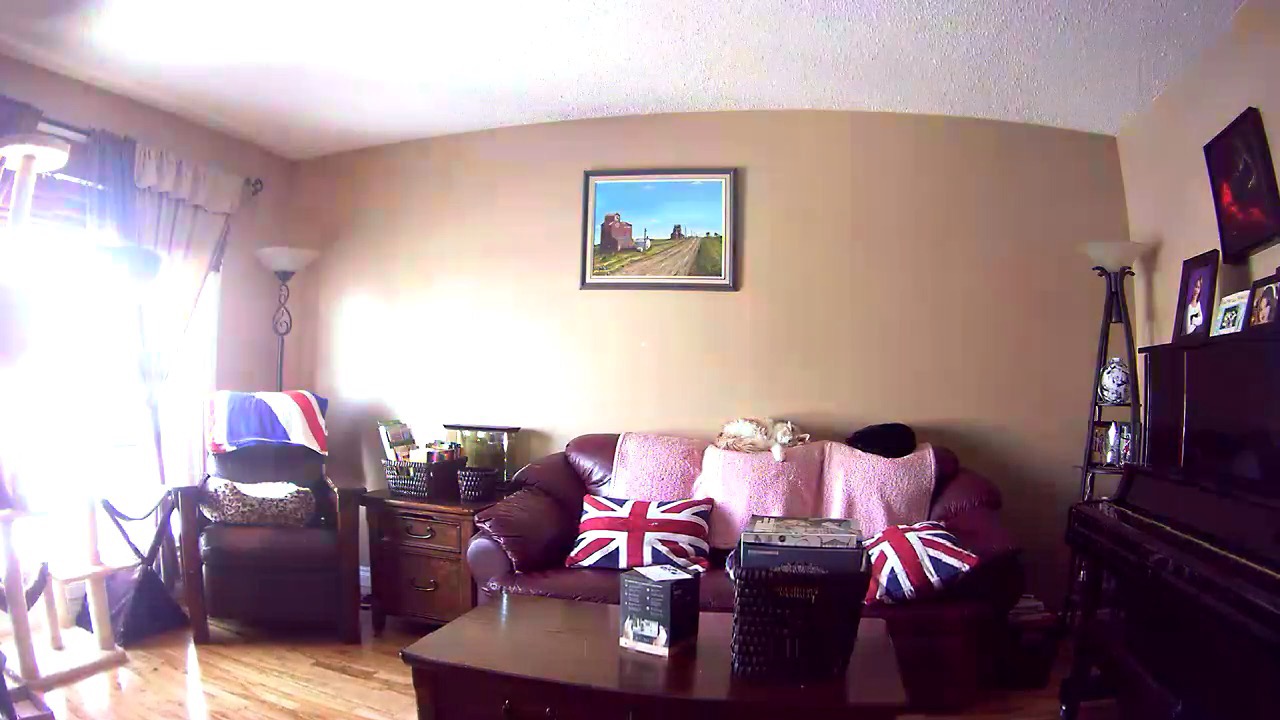
And so I took the plunge and purchased the PetCube, setting it up in my living room. It could not have been any easier to install, and it worked exactly as promised. In fact, it worked even better than I could have ever imagined, as on the first night I found myself staying up way past my normal bedtime simply to marvel at the ability to spy on the cats in the dark.

What I discovered through my new kitty spycam is that the cats sleep all day. Literally. One of the cats, in fact, rarely moves during the day aside from an occasional yawn or stretch, spending most of his time sprawled out on the sofa back. And the other two cats, the ones I suspected of fighting?

They don’t fight during the day. Ever. In fact, what the PetCube has shown me is that the two suspected assailants only ever assault each other at one point in time: when I am home. The common factor in every fight is the presence of their owner, which seems to indicate they fight not over territory or turf but over access to the single human in the home. In fact the female cat rarely ventures into the living room during the day, preferring to be other places until I return home – and that is when the trouble begins, as she wanders into a space the male cats have deemed their ‘hood.  This alone has made the kitty spycam worth the $350 it cost.

But, as they say on television, wait, there’s more!

PetCube Play allows you to set up access for others to the camera feed. This means my daughter, who initially dismissed the concept of a camera for the cats as some new level of batshit crazy her mother had sunk to, can watch and even use the laser pointer to play with the cats – from eight hundred kilometres away. I can always tell when she is online as I find a red laser beam dancing somewhere around my forehead and cats frantically swarming the sofa in an attempt to capture the elusive red dot, smacking me with barely sheathed claws in the process.

I have now observed the cats during the day and during the night. I have seen how, when I arrive home at the end of the day, they leap off the sofa to greet the human can opener, the only creature in the house with opposable thumbs and therefore of some limited value in the feline mind. I have witnessed zero fights and I have seen a lot of enviable sleeping, stretching and yawning.

Most of all, though, I have discovered this small technological wonder allows my daughter to connect with her cats again, diminishing some of her longing for them. It allows me to keep an eye on them and to occasionally peek into a serene scene at my home, cats lounging on the sofa and an occasional woof from the kitchen, where the elderly dog prefers to spend her daytime hours as it is free of cats and cameras.

This is not a paid review – I paid full price for the PetCube Play and I would do so again, as it has already been worth every dime. This is also not a full admission of my descent into the land of the crazy cat lady, as the kitty spycam is not nearly as nutty as it may initially sound; in fact, I think many pet owners would enjoy seeing what their pets are up to every day (and night, should they be the kind of stalkers I am).

And if one reads this and happens to think I am a Crazy Cat Lady, then I accept that label with pride and with a complete lack of regret. But, I am a Crazy Cat Lady with a kitty spycam, and that, my friends, makes all the difference.


Be The Candle

It is so easy to give in to anger.

I hold my phone in disbelief, the tweet declaring “Breaking news: shooting in mosque in Quebec” frozen on my screen. My hands are shaking and I feel ever so slightly nauseated, because this is terrible news that comes hard on the heels of earlier news of individuals from seven countries detained at airports and mass protests taking place in response to actions by the new American president.

It would be very, very easy to be consumed by vengeance-fuelled rage at the individual who entered a quiet mosque in my country and killed six people, wounding several others. And this rage – this hate – would do what exactly?

It would feel good, for a moment. Maybe even for a few moments – but allowed unchecked it would do nothing but contribute to the kind of world in which citizens of my own country enter a house of worship and kill people.

I think sometimes in Canada we become a little complacent. That’s because we see ourselves as fundamentally good and gentle people, the vast majority of us immigrants somewhere along our family history, welcoming to those of other countries, faiths and beliefs. And yet if one scratches at the surface – and you don’t need to scratch too hard – you can find the dark shadows of bigotry, racism and religious intolerance.

Oh, we defend it, to try to make it seem we are just “protecting our Canadian way of life” (which of course has changed several times as new residents joined our country, as we moved from predominantly rural to urban, from largely agriculture-based to industry). Or we find myriad other ways to pretend that we are not distrustful, not intolerant and not being driven by hate.

Yes, hate. It seems so un-Canadian to discuss hatred, to say we are far more affected by it than we care to admit, but perhaps it is time to acknowledge the truth. We are not pristine in our treatment of others, and we are not immune to the path hate makes for us.

A path that this week ended in a mosque in Quebec.

I am old enough to recall another shooting in Quebec, this one ending in several dead women and at the heart of it a man who hated women. At that point in time I don’t think we thought of ourselves as a country that had men in it who hated women with enough vehemence to carry a gun into a college, but when it happened we suddenly woke up and realized that perhaps misogyny had deeper roots in Canada than we realized. As a young Canadian woman, that shooting changed my life.

As we begin to learn about the suspect in this shooting, I think we may come to realize some disturbing things about our country. We will learn about the roots of homegrown terrorism – because that is what this act was – and about the hatred that exists in our own nation.

For those who have been complacent or casting stones at our neighbour to the south, we must instead look at our own fragile glass house, freshly shattered panes and all. We must recognize we are not immune to anger, we are not safe from violence and we too can forge a path founded on hatred.

And that is perhaps the hard part. We cannot give in to the hatred, and we cannot act out in our anger and sorrow; instead we must come together to support, embrace, encourage and love those who are the victims of this hatred and violence. We must acknowledge the flaws in our own country, and we must, each and every one of us, ensure that our words and actions do not contribute to hatred, anger and violence.

We must move forward in the spirit of respect, dignity, kindness and acceptance of all those who share this incredible, amazing and beautiful country founded on the diversity of its residents.

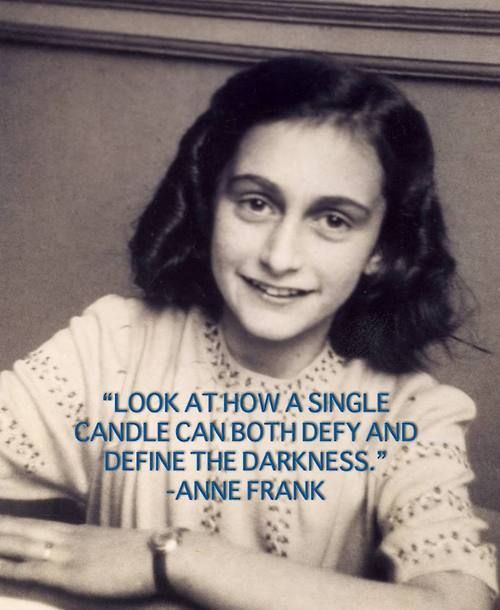
And we can do this, every single one of us. A few decades ago, in another dark and troubling time, a young woman wrote in her diary: “Look at how a single candle can both defy and define the darkness.”

We must be the candle, my friends, and we must both defy and define the darkness that could so easily come to rest within us. And by so doing, we can be the beacon of light that ensures hatred will never, ever win.

Be the candle.

b52c79db7cdb27bc9235977d55f27db4


Let’s Talk, Fort McMurray

Let’s talk.

A friend recently told me her husband, a big burly guy not usually prone to expressing his feelings, has begun seeing a therapist. Her husband, perhaps best described as “macho” if that word were still common place, decided of his own volition to seek help after realizing he was struggling to cope with the events of May 3, 2016.

When he told his wife what he said was that he never thought he would need to see a therapist, and he certainly never thought he would tell others he was doing it, but because it is so normal in our community post-wildfire that he felt it would be accepted and understood.

So let’s talk about it taking a natural disaster that saw tens of thousands of people evacuate in terror for people to understand that it’s okay to talk about mental health.

A study just released shows members of this community are suffering from PTSD. Sixty percent of the respondents in a survey indicated they were experiencing significant impacts from the fire, including flashbacks to the fire and the evacuation, trouble sleeping and anxiety. It is unlikely this comes as any surprise to those who lived through those days in May, as it would be difficult to experience them and not be deeply impacted. Perhaps more surprising is that even more people did not report these symptoms of PTSD, but the truth is that while some never will, others may find the mental health impacts surface months or even years from now.

So let’s talk about the reality that mental illness can strike at any time and for any reason; it can be related to a specific incident or be omni-present with no clear catalyst.

The RCMP recently shared some statistics regarding crime in our community. One would expect that as our population has dipped after the fire, our crime rate would fall as well. And yet, domestic violence has not fallen in the last quarter of 2016 compared to the last quarter of 2015, staying at the same figure despite the decrease in population.

So let’s talk about how that study showing that 60% of our residents suffering from PTSD symptoms could well be tied to domestic violence, as there is no doubt stress and anxiety plays a factor in life at home.

There are some other numbers I would be intrigued to see; work and school absenteeism rates post-fire, for instance, as our mental health and physical well-being are inextricably linked.

Let’s talk, my friends.

Let’s talk openly and freely about our experience on May 3.

Let’s talk about the mental health resources available to us, not just at this time but at all times in our community.

Let’s also talk about the lack of mental health resources for children and youth, our most vulnerable sector.

And let’s talk about how we need to move past judging those who tell us of their mental health struggles and how we need to stop pretending that we are impervious to mental health issues; because, like my friend’s husband, the truth is absolutely none of us know when we might experience a mental health crisis.

As someone who has suffered from anxiety and depression after the death of my mother, I can say I was one of those people who was convinced I would never be impacted by mental illness – you know, other than the fact that my mother experienced mental illness which undoubtedly affected my childhood, and all the other family members who exhibited symptoms of a wide range of mental health challenges. But me? I was untouchable, or so I thought until I realized one day that I too was showing signs of mental distress and that it was affecting my entire life.

Discussing our mental health isn’t a sign of our weakness; it’s a signal of our strength and our willingness to display our vulnerability in the hope of helping others. In 2016, Fort McMurray and residents of the Wood Buffalo region learned a lot about hope, vulnerability, strength and helping others. I believe we have the opportunity to be national leaders in talking about mental health because we experienced something most others in world will thankfully never encounter, and as we work through the impacts we are learning more and more about the importance of mental health in our schools, our workplaces, our homes and our communities.

So let’s talk, Fort McMurray. Let’s really talk, every single day. And let us lead this country in this journey, because through sharing our experiences we can help others to share their own – and learn to really talk about mental health.

A Wisp of Smoke

It doesn’t take much.

It is my usual early Monday morning drive to work, Starbucks in hand as my car heads down Thickwood Boulevard, surrounded by trees on either side as I glide down the hill towards the juncture with Highway 63. My thoughts are filled with the week ahead – the must-be-dones, the should-be-dones, the things-likely-to-be-left-undone, just as every week begins.

I see it first as just a wisp at the top of the trees, a small shadow of smoke; as I draw closer, it becomes a column of smoke and suddenly, irretrievably and irrevocably, I am yanked back in time to the beginning of May.

It doesn’t matter that I know controlled burns are taking place as part of the FireSmart program. It doesn’t matter that the smoke is grey, not that black shade I will never forget as long as I live. It doesn’t matter that it is the dead of winter, snow covering grass and ground that would be resistant to flames now, unlike the tinder-dry conditions of several months ago.

None of that matters, because the connection between my brain and my heart has been severed by a thin column of grey smoke, and I can feel emotions that I thought I had put aside for some time beginning to rise.

I don’t feel panicked or afraid; I feel instead a form of nausea, a fundamental shakiness rocking me to the core. My head keeps telling my heart that everything is okay and all is fine and this is controlled and there is nothing to fear, and yet my heart is continuing to pound.

It isn’t until I reach my office and look out, seeing a clear grey sky with no smoke in sight, that I begin to feel normal again, because of course on May 3 what I saw across the river from my office was a wall of thick black smoke and bright red flames.

I do not believe I have PTSD, although I know others in my community suffer from this after the experience of May 3; I believe instead I have become hyper-aware of fire, sensitive to the sight, sound and smell of a natural phenomenon that I have contended with for as long as I have lived in northern Canada (now more than twenty years). I have always respected the power of wildfire, but now it is more than respect. It is an emotion for which I do not think a word exists, at least not a word I have yet been able to find.

There are experiences in life that alter you forever. I have experienced three.

The death of my mother.

The birth of my daughter.

The fire that I thought I might not survive.

And that is the truth, the real core of it all; on May 3, for the very first time in my entire life, I questioned if I would survive. There was no certainty of it; I remember watching a wall of flames and smoke and realizing how vulnerable I was. How vulnerable we all were.

And while I am here to tell the tale, to write these words, I will never forget that for a moment in time, no matter how brief it was, I questioned if I would be. And it seems that feeling will never leave me, much like the emotion I felt when I held my mother’s hand as she took her last breath and the one I experienced at the moment my daughter entered the world, altering my universe forever.

Life changes us. Experiences, the good ones and the bad ones, change who we are, how we see things and how we feel about the world around us. I suspect that no matter how many years pass, the sight of smoke will always trigger a cascade of feelings that were first felt on a beautiful sunny day in May that turned into a horror. And this is neither a “good” thing or a “bad” thing – it just is and will always be.

And that’s okay, too.

Over fifty years, I have learned that trying to suppress the changes experience has created is when you truly begin to suffer, as those changes do not like to be denied. You can pretend they don’t exist, stuff them down, try to shove them in a mental closet or the glove compartment of your mind, but they are always going to be there, lurking.

So, you may as well accept them.

This morning, a wisp of smoke forced me back to a day months ago, one that feels like it happened in another lifetime. As I allowed the feelings to wash over me, I focused on all the things I have learned since that day; most significant of all being sheer gratitude for surviving. Once again I felt deep thankfulness for those who fought the flames, a strong connection to the others in my community who lived through the same experience and a profound wonderment at how life can change so quickly.

All too often in life we cannot control what happens to us; our only control lies in how we respond to it. I will always be proud of how members of my community responded to a natural disaster that threatened us all. I will always find hope and comfort in the way we reached out to each other in those early days. I will always feel more deeply connected to my community as the result of an experience that impacted us all, each of us in different ways and with different stories to tell.

And I will always see a wisp of smoke and think back to a bright and sunny spring day when life as I knew it was altered forever. My heart will always take the lead in this one, because it will never forget that day, those moments or that experience; and I will treasure it as the time when I learned the true meaning of courage, resiliency, gratitude and strength.

Just a wisp of smoke.

It doesn’t take much.

The Meaning of Social Media

I chose the title for this one quite deliberately, as it is meant to reflect two things: 1) what the existence of the social media has come to mean in our lives and 2) how it seems social media seems to be taking on an ever-increasingly mean tone.

I’m one of those dinosaurs who has been around since the very early days of social media. I was there when forums and chat rooms were all the rage, seen it evolve into Facebook and Twitter and then revolutionize once more with smart phone cameras and the rise of Instagram and Snapchat. It has been intriguing to witness, as just one generation removed from me, my parents would have been baffled by much of this as the technology just didn’t really exist when they were at an age when it would have interested them; and just one generation down, my daughter is a digital native, growing up in a world immersed in social media. And what I have noted over time is while the medium of delivery changes from chat rooms to Facebook, from forums to Instagram, what also seems to be happening is a progressive increase in truly nasty behaviour.

Don’t get me wrong – the internet “troll” has always been there, and these individuals continue to plague every social media site; but what is more concerning is that social media seems to have enabled other people, who are quite likely fairly normal individuals in other aspects of their lives, to behave in an aggressive manner online simply because social media has removed the face to face nature personal communication once required.

It seems a sad indictment that threats of violence or death are common place on social media now, enough so that seeing them is no longer shocking. The level of anger and hatred would be stunning if it wasn’t so routine. Demeaning and disturbing language and commentary are ubiquitous, enough so that some individuals are giving up on social media entirely and deleting their accounts; and spaces that once seemed “safe”, like Instagram, have begun to see a rise in this behaviour as users take their anger there.

It isn’t that this is entirely new, as there were always “mean people” on the internet, just as there have always been these individuals in every facet of life. It just seems that many people, including the ones who one would not traditionally consider “mean”, are dropping their inhibitions as soon as their fingers hit the keyboard.

It is, undoubtedly, a change in our social interactions. Few of us would have stood in front of our neighbour and said the aggressive and charged things we will say to others on social media. I suspect few of us would have argued for hours with him on his political or social views, and once things got intensely heated most of us would have backed off to preserve inter-neighbour relations. And very, very few of us would have issued threats of violence or death, or encouraged him to commit suicide; and yet these interactions are taking place on social media on a daily basis – often between complete strangers.

Why? Perhaps this is where the meaning of social media comes into play, as what it has come to mean is that we have created a world where anyone can speak to anyone, no matter the actual physical distance between them, leading to a world where interactions have few, if any, real-world consequences. No wonder our inhibitions have dropped; there is no reward or punishment for having them, because the truth is that to some degree we are untouchable online. Real life behaviour of this sort in our workplace, our homes and our communities would have dire consequences, but online? There are few repercussions.

I have begun to suspect that there will be a time when the pendulum will swing, and our interest in social media will wane. The digital natives will see the times before the existence of social media as nostalgic and perhaps long for the days when communicating with someone meant visiting their homes, meeting for coffee or even picking up the phone. Or perhaps the digital natives will pull their circle of interactions tighter, closing their own social media down and limiting their interactions to those they know, which may well defeat the positive aspect of social media that allowed you to interact with people from around the world. Or maybe it will continue just as it is, with social media continuing along this very same path.

There was a time when I extolled the virtues of social media: the ability to connect, the ease of use, the breaking down of barriers. I find myself now increasingly concerned about the dark side of social media, and how it has not only begun to change but form how we behave.

Recently I watched a tv series from the UK called “Black Mirror”. While not perfectly executed in terms of acting and direction, the series is an exploration along the trajectory of trends we see in our world as related to technology, and particularly social media. It is both intriguing and worrisome, as some of the stories developed are far closer to fact than fiction as our technology-train rushes ahead while our social norms and behaviour run beside it on the train platform, trying to catch up and hop on board.

In the end for me the meaning has been to become ever more cognizant of my own behaviour online. There is room for debate and discussion, but when the pot begins to boil I’ve learned to step away. I no longer invest time or energy in discussions where others behave badly, as it just feeds into their behaviour and encourages it; and I don’t allow some behaviour on the social media I control, as limited as those powers might be. I can’t change or control the behaviour of millions, but I can change and control my own, and not contribute to the meaning – or demeaning – of social media.

I suspect in the future we will see more studies correlating a rise in anxiety and depression linked to social media use, as these have already begun to surface. The technology we hoped might create a global community may well instead contribute to global misery as we struggle to develop new social behaviour to adapt to a new setting; or, perhaps, the digital natives like my daughter and generations after may have already developed the adaptations necessary to navigate this brave new world.

It is one of those things that only time will tell; and some day, far from now, we may only begin to understand what the meaning of social media truly holds for us.